

Inside Our World

Scenes from our checklist-driven journey—yes, some are as silly as they look.

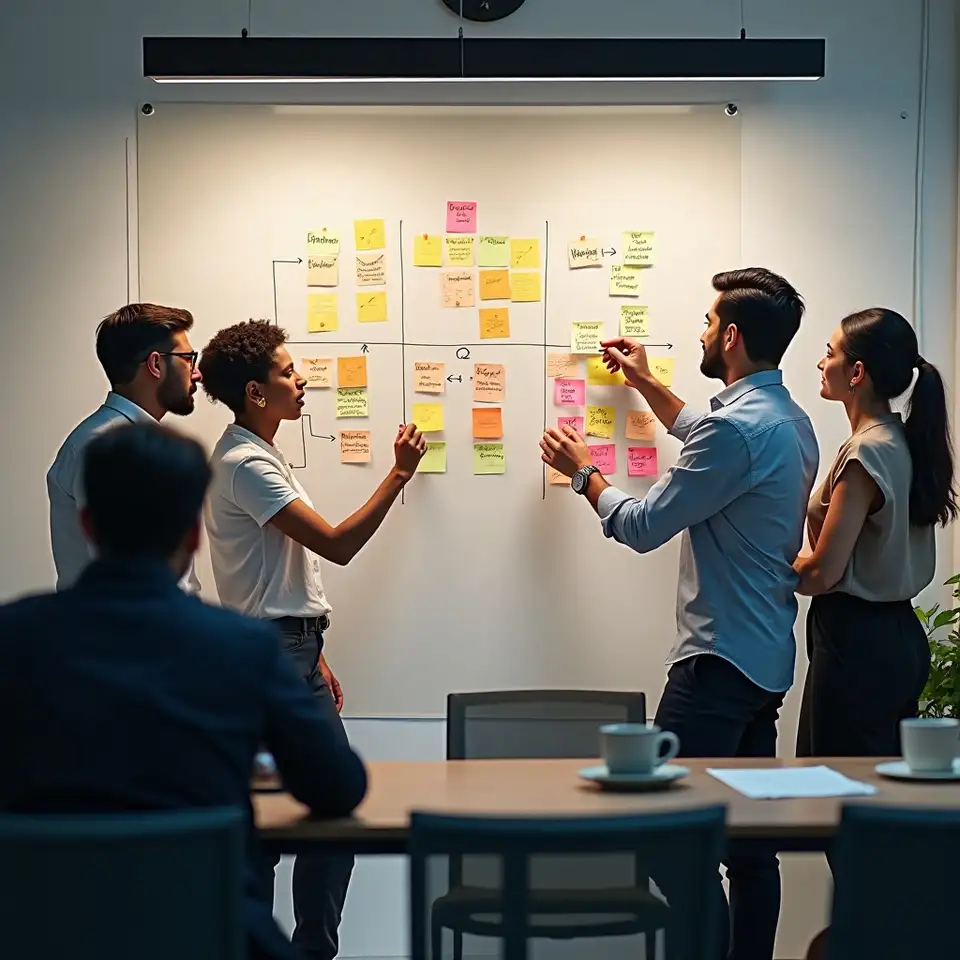
Whiteboard full of process diagrams and sticky notes
1

Checklist brainstorm

Whiteboard full of process diagrams and sticky notes
Team members laughing during meeting in bright office
2

Playful team moment

Team members laughing during meeting in bright office

Computer screen showing duplicate task alert interface
3

Detection in action

Computer screen showing duplicate task alert interface

Why our product is more like a friendly observer than a taskmaster. Our system fits into your workflow, not the other way around.

Why We Built Our Product

We compare duplicate effort detection to making sure nobody brings the same side dish to lunch.
In a group, everyone means well, but sometimes two people show up with the same work. We designed our AI to spot this and quietly raise a flag.

Our approach is humble: we try, we miss, we try again. We see every overlap as a learning moment, not a problem to solve once and for all.

We’re happy if our tool saves even one checklist a week. If not, we’ll keep asking what we missed and invite you to join the experiment.

We started with a question: why does work repeat itself in teams?

Duplicate effort means doing the same thing twice, unintentionally. We chase this problem like kids look for hidden snacks—sometimes with messy results, but always curious.

We use AI as a not-so-perfect assistant. It checks off steps, compares actions, and points out overlaps. Like any assistant, it gets things wrong, but we keep adjusting the checklist.
Our team isn’t a group of gurus. We experiment, ask for feedback, and let user confusion guide our tweaks. If our tool makes you smile, that’s a win.

What We Mean by Duplicate Effort Detection

Explaining why our work exists, and why we keep tinkering with every checklist and suggestion.

About Duplicate Effort Detection

Team in office discussing AI workflow
Let’s define the term: duplicate effort detection means spotting when two people (or one person, twice) work on the same task without knowing it. We think of it like when you and your friend both bring samosas to the picnic, but nobody brings chutney. Our team started out asking, what if AI could track those moments at work? We built a system that looks for repeated steps, flags similar actions, and lists them for review. We don’t pretend to have all the answers, but we love making checklists. Every feature we add aims to help teams reduce wasted work—without making you feel like a robot. We’re based in India, enjoy comparing project notes to lunch orders, and secretly hope you’ll find our tool as helpful as a well-timed reminder. We’re still learning, so suggestions are welcome. If you spot us repeating ourselves, let us know. That’s our own little test.

Our Guiding Principles for Chasing Duplicate Effort

0 Pattern

We Value Real Workflow Patterns

We believe every repeated task is a story waiting to be told. Our role is to notice the pattern, not to judge it. Each overlap teaches us how teams really work, not just how they say they work.
0 Nudge

Gentle, Never Pushy Suggestions

Our system nudges, not shoves. We present overlaps gently, letting teams decide if it matters. We try not to interrupt flow, just to highlight the obvious (and sometimes the not-so-obvious).

0 Learning

Learning From Our Missteps

We learn from mistakes. Every time our AI gets it wrong, that’s a clue. We ask users to share their confusions so we can update our process and avoid repeating the same misstep.

0 Feedback

Invite, Listen, Adapt—Repeat

Our best ideas come from people telling us what feels off. We invite criticism, weird analogies, and open discussions. That keeps our product as honest as our lunch order feedback.

How Our Duplicate Detection Works

A peek at our low-drama approach, and why we still prefer a good checklist over wild promises.

Our process is simple: find, flag, and nudge. No drama, just a checklist.

First, we scan team workflows for any tasks that seem to be done more than once. We keep our AI honest by comparing each step, not just the headlines.
Then, we flag anything suspicious. The system points out possible repeats so real people can decide if it’s useful or just noise.
Finally, we nudge teams to review the list. We admit, sometimes our nudge is more like a polite suggestion than a life-changing insight.

How We Approach Duplicate Work

Our core idea: find the same work happening twice and point it out, so people waste less time. We keep things practical and admit our system isn’t perfect, but we keep refining.
Checklist for Overlaps
We spot repeated work in team workflows, flagging similar actions so you can skip the copy-paste routine.
Curiosity Drives Us
We build tools for curious teams who question their own process and want less wasted effort.
Analogies Rule Here
We rely on analogies (lunch orders, anyone?) to explain our process and help users feel at ease.
Mistakes Are Welcome
We value learning out loud—mistakes help us build better features, and we share what we discover.

Who We Are

Duplicate effort detection is our focus. We watch for tasks done twice in a workflow and point out the overlap. We are not experts, just playful problem solvers who ask too many questions and build checklists as our answer.
We built our AI because we got tired of hunting for repeated tasks by hand. We think of ourselves as learners, not gurus.
We believe in feedback, good snacks, and sometimes getting it wrong before we get it right. That’s how we improve our approach, one checklist at a time.
Team working together on project

Cookie preferences

Change cookie settings

View our cookie policy

Cookies on this site

We use cookies to spot repeated work, remember your settings, and track anonymous stats. Adjust your preferences if you like. Nothing sneaky—just honest checklists.